Thursday, February 05, 2026
Meeting Time: 7:00 pm
Online event (via Zoom): Please register on meetup.com to obtain the Zoom link.
Lecture
When designing an electronic product, one of the areas that often gives the designer trouble is how to properly provide power for it. The designer is often faced with design constraints such as voltage regulation, current load, isolation, size, weight, and cost to name a few.
That’s where power converters come in. Simply put, power converters are the means of taking an input voltage and providing the desired output voltage, current, and frequency.
This entry level seminar will provide a practical introduction to the design and testing of power converters. We’ll discuss the various types of power converters, their typical applications, and their main advantages and disadvantages.
Power conversion concepts that will be explored include:
- AC vs DC inputs and outputs
- Linear regulators vs. switching power converters
- Common topologies, including:
- Theory of operation of buck & flyback converters
- Pulse Width Modulation
- Current mode control vs. voltage mode control
- Power supply feedback loops
After covering the basics of power converters, this presentation will then go step by step through the design process of a flyback converter.
This detailed design example will cover the motivating application, design parameters, component selection, control loop compensation, circuit board layout, and hardware testing/results.
Speaker Bio:
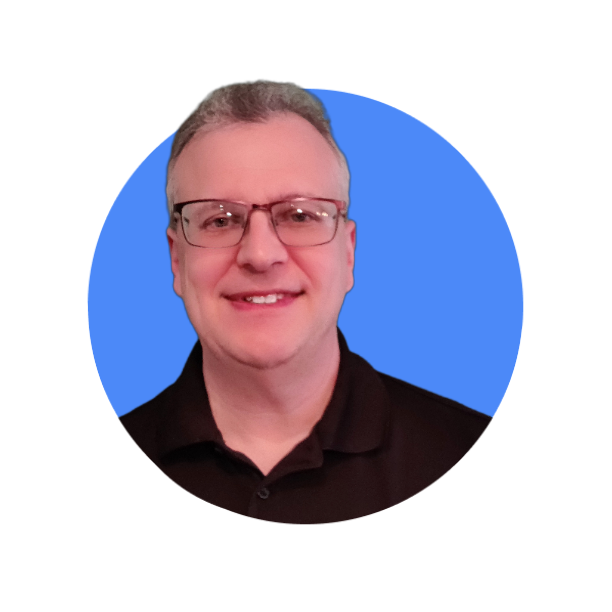
Brian King has over 28 years of experience in power supply design, specializing in isolated AC/DC and DC/DC applications. Brian has worked directly with customers to support over 1500 business opportunities and has designed over 750 unique power supplies using a broad range of TI power supply controllers.
He has published over 50 articles related to power supply design, and since 2016 is the lead organizer and content curator for the Texas Instruments Power Supply Design Seminar (PSDS) series, which provides training to thousands of power engineers world-wide on a regular basis.
Brian received a MSEE (1996) and BSEE (1994) from the University of Arkansas.
Notes
There is no cost to attend this meeting, however, if you are a NYS Professional Engineer and would like to receive Professional Development Hours (PDHs) of continuing education credit, then payment of a $15 fee is required. PDHs will be granted based upon actual time of lecture including Q&A. You must stay to the end to receive credit. You will also have to properly fill out an Evaluation Form to prove that you attended this lecture.
Click here to open the form. Simply fill it out and click on the “Submit” button.
We accept electronic payment via Zelle. Zelle is a bank-to-bank transfer mechanism supported by most banks, without a fee, as part of their normal online banking capabilities. There is also a Zelle app available for your smartphone.
When you use Zelle with your bank, it will ask for the following information: 1) the amount to send (enter $15.00), 2) what account you want to pull the money from (select whatever account you want to use), and 3) the phone number or email of the recipient (enter ieeelicn@gmail.com. Don’t worry if you see the name of our Treasurer, David Rost, pop up). If it asks for a memo field, we suggest entering "yymmdd LICN CEU” where yymmdd are the year, month and date of the lecture.
While we prefer that your payment and evaluation form are received by the day of the lecture, they must be received by the first Monday after the lecture.
If paying by Zelle is a problem for you, then please contact Ed Gellender at edgellender@gmail.com for an alternate payment method.