Thursday, March 05, 2026
Meeting Time: 7:00 pm
Online event (via Zoom): Please register on meetup.com to obtain the Zoom link.
Lecture
Quantum computers promise to tackle problems so complex that today’s fastest computers would struggle for years. But how do these machines actually work—and how do we read answers from something as delicate as a quantum system?
In this lecture, we’ll take a deep dive into how quantum computers communicate with the classical world, focusing on the real engineering challenges that stand between quantum theory and usable results. No prior background in quantum mechanics required—just curiosity.
What you can expect
- An introduction to quantum computing
What makes quantum computers different from classical ones, and why they’re such a big deal.
- How quantum computers “talk” to regular computers
Learn how microwave signals are used to control quantum systems and retrieve results.
- From electrons to answers
How quantum calculations begin by exciting particles and end with signals we can actually measure.
- Why measurement is tricky in the quantum world
How engineers extract useful data without disturbing fragile quantum states.
- The hidden enemy: thermal noise
Why heat and noise matter so much—and how engineers work to minimize their effects.
- Engineering solutions
Practical techniques to amplify and recover quantum data for classical digital computers.
If you’ve ever wondered how quantum computers bridge the gap between mind-bending physics and real-world hardware, this talk will connect the dots.
Speaker Bio:
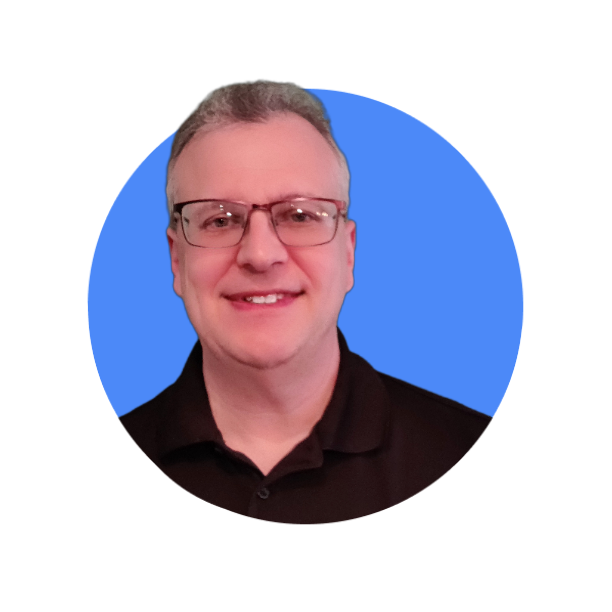
Howard Hausman received his MSEE degree from Polytechnic University/Tandon School of Engineering, NYU where he was an Adjunct Professor. He is currently President/CEO of RF Microwave Consulting Services and an Adjunct Professor at Hofstra University and an Adjunct Associated Professor at NYIT.
Formerly Mr. Hausman was CTO and VP of Engineering, before being appointed President/CEO of MITEQ Inc., a world renown microwave engineering company with approximately 500 employees. He has designed hardware, wrote papers and lectured on microwave systems and components for Satellite Communications, Space Systems, Radar and Reconnaissance systems.
Howard Hausman is a recipient of an NYU Distinguished Alumni Award, the IEEE LI Alex Gruenwald Award “For outstanding contributions to enhance the knowledge of the IEEE LI Section members”, and a NASA Award for work on the Mars Landing System.
Mr. Hausman is currently the Chairman of the IEEE LI Communications Society and was awarded a patent “Measuring Satellite Linearity from Earth Using A Low Duty Cycle Pulsed Microwave Signal”. He also authored a textbook “Microwave Power Amplifier Design with MMIC Modules” published by Artech House.
Notes
There is no cost to attend this meeting, however, if you are a NYS Professional Engineer and would like to receive Professional Development Hours (PDHs) of continuing education credit, then payment of a $15 fee is required. PDHs will be granted based upon actual time of lecture including Q&A. You must stay to the end to receive credit. You will also have to properly fill out an Evaluation Form to prove that you attended this lecture.
Click here to open the form. Simply fill it out and click on the “Submit” button.
We accept electronic payment via Zelle. Zelle is a bank-to-bank transfer mechanism supported by most banks, without a fee, as part of their normal online banking capabilities. There is also a Zelle app available for your smartphone.
When you use Zelle with your bank, it will ask for the following information: 1) the amount to send (enter $15.00), 2) what account you want to pull the money from (select whatever account you want to use), and 3) the phone number or email of the recipient (enter ieeelicn@gmail.com. Don’t worry if you see the name of our Treasurer, David Rost, pop up). If it asks for a memo field, we suggest entering "yymmdd LICN CEU” where yymmdd are the year, month and date of the lecture.
While we prefer that your payment and evaluation form are received by the day of the lecture, they must be received by the first Monday after the lecture.
If paying by Zelle is a problem for you, then please contact Ed Gellender at edgellender@gmail.com for an alternate payment method.